It wouldn't be Superbowl if it didn't give us some ads to talk about.
Apparently, AshleyMadison.com managed to slip their new commercial (youtube) into the Super Bowl after being formally rejected by the NFL and NBC from airing nationwide. For those of you don't want to google, the website, a Canadian company, is a dating site geared toward married people who want to have affairs. Yes, that's the sole focus of that website!
Ironically, the current economic environment has something to do with the slippage of the standard. According to its CEO, "The effects of the current recession are so profound that many local stations were willing to accept Ashley Madison advertising dollars." And what's more, "In this current economic climate," he adds, "Divorce isn't an option for many women who are stuck in unhappy marriages. We want them to know there's a service just for them."
Oh, this isn't just a North American thing. I've heard stories from my relatives about Chinese white collar girls advertised themselves to be "second wife", allegedly to weather the economic storm.
Ads from the dating website isn't the only banned commercial Super Bowl. A pro-life video portraying President Obama as an unborn child has also been rejected by NBC-TV, alongside with a PETA commercial.
Sometime, you wonder what the world has come into. You know, there is Super Bowl, and then, there is super "balls", as in somebody's got the "ball".
Monday, February 2, 2009
Super "Balls"

Monday, September 15, 2008
Say Cheese
Antonioni's film Chung Kuo was shot in 1974, under special approval from the then Chinese government. It was subsequently banned for "negative portrait" of China, the ban was lifted after 30 years in 2004.
Those days in Antonionno's film are long gone. You can hardly identify the scenes in the film of today's Tian'anmen Square, or Shanghai, except maybe the ritual way people taking pictures - in wedding photography boutiques. Zhang YiMou would later make a name for himself in the west depicting the rural China - before he resurrected himself directing the Olympics Ceremonies, that is, those days are gone too. But the film remains particularly interesting, you can see the pace of life, the innocence on people's faces of that time.
I am interested in photography, as a way to capture reality, and present perceived reality. Susan Sontag's comments about the film in On Photography provided some interesting perspective beyond the film. Frankly, both "They are trying to bring us down" crowd and "You are either with us or against us" crowd will benefit reading it. As ESWN comments, this is hardly about this particular movie but extends to the rest of life. Of course, no one should take everything said in an art critique as literal truth, so no need to boil your blood over:
Nothing could be more instructive about the meaning of photography for us -- as, among other things, a method of hyping up the real -- than the attacks on Antonioni's film in the Chinese press in early 1974. They make a negative catalogue of all the devices of modern photography, still and film.Related Content of This Rocking Post
While for us photography is intimately connected with discontinuous ways of seeing (the point is precisely to see the whole by means of a part -- an arresting detail is a striking way of cropping), in China it is connected only with continuity. Not only are there proper subjects for the camera, those which are positive, inspirational (exemplary activities, smiling people, bright weather), and orderly, but there are proper ways of photographing, which derive from notions about the moral order of space that preclude the very idea of photographic seeing.
Thus Antonioni was reproached for photographing things that were old, or old-fashioned -- "he sought out and took dilapidated walls and blackboard newspapers discarded long ago"; paying "no attention to big and small tractors working in the fields, [he] chose only a donkey pulling a stone roller" -- and for showing un-decorous moments -- "he disgustingly filmed people blowing their noses and going to the latrine" -- and undisciplined movement -- "instead of taking shots of pupils in the classroom in our factory-run primary school, he filmed the children running out of the classroom after a class."
And he was accused of denigrating the right subjects by his way of photographing them: by using "dim and dreary colors" and hiding people in "dark shadows"; by treating the same subject with a variety of shots -- "there are sometimes long-shots, sometimes close-ups, sometimes from the front, and sometimes from behind" -- that is, for not showing things from the point of view of a single, ideally placed observer; by using high and low angles -- "The camera was intentionally turned on this magnificent modern bridge from very bad angles in order to make it appear crooked and tottering"; and by not taking enough full shots -- "He racked his brain to get such close-ups in an attempt to distort the people's image and uglify their spiritual outlook."
Besides the mass-produced photographic iconography of revered leaders, revolutionary kitsch, and cultural treasures, one often sees photographs of a private sort in China. Many people possess pictures of their loved ones, tacked to the wall or stuck under the glass on top of the dresser or office desk. A large number of these are the sort of snapshots taken here at family gatherings and on trips; but none is a candid photograph, not even the kind that the most unsophisticated camera user in this society finds normal -- a baby crawling on the floor, someone in mid-gesture. Sports photographs show the team as a group, or only the most stylized balletic movements of play: generally, what people do with the camera is assemble for it, then line up in a row or two. There is no interest in catching a subject in movement.
This is, one supposes, partly because of certain old conventions of decorum in conduct and imagery. And it is a characteristic visual taste of those at the first stage of camera culture, when the image is defined as something that can be stolen from its owner; thus Antonioni was reproached for "forcibly taking shots against people's wishes," like "a thief."
Possession of a camera does not license intrusion, as it does in this society whether people like it or not. (The good manners of a camera culture dictate that one is supposed to pretend not to notice when one is being photographed by a stranger in a public place as long as the photographer stays at a discreet distance -- that is, one is supposed neither to forbid the picture-taking nor to start posing.) Unlike here, where we pose where we can and yield when we must, in China taking pictures is always a ritual; it always involves posing and, necessarily, consent. Someone who "deliberately stalked people who were unaware of his intention to film them" was depriving people and things of their right to pose, in order to look their best.
Antonioni devoted nearly all of the sequence in Chung Kuo about Peking's Tien An Men Square, the country's foremost goal of political pilgrimage, to the pilgrims waiting to be photographed. The interest to Antonioni of showing Chinese performing that elementary rite, having a trip documented by the camera, is evident: the photograph and being photographed are favorite contemporary subjects for the camera. To his critics, the desire of visitors to Tien An Men Square for a photographic souvenir is a reflection of their deep revolutionary feelings. But with bad intentions, Antonioni, instead of showing this reality, took shots only of people's clothing, movement, and expressions: here, someone's ruffled hair; there, people peering, their eyes dazzled by the sun; one moment, their sleeves; another, their trousers. ...
The Chinese resist the photographic dismemberment of reality. Close-ups are not used. Even the postcards of antiquities and works of art sold in museums do not show part of something; the object is always photographed straight on, centered, evenly lit, and in its entirety.
We find the Chinese naïve for not perceiving the beauty of the cracked peeling door, the picturesqueness of disorder, the force of the odd angle and the significant detail, the poetry of the turned back. We have a modern notion of embellishment -- beauty is not inherent in anything; it is to be found, by another way of seeing -- as well as a wider notion of meaning, which photography's many uses illustrate and powerfully reinforce. The more numerous the variations of something, the richer its possibilities of meaning: thus, more is said with photographs in the West than in China today.
Apart from whatever is true about Chung Kuo as an item of ideological merchandise (and the Chinese are not wrong in finding the film condescending), Antonioni's images simply mean more than any images the Chinese release of themselves. The Chinese don't want photographs to mean very much or to be very interesting. They do not want to see the world from an unusual angle, to discover new subjects. Photographs are supposed to display what has already been described. Photography for us is a double-edged instrument for producing clichés (the French word that means both trite expression and photographic negative) and for serving up "fresh" views. For the Chinese authorities, there are only clichés -- which they consider not to be clichés but "correct" views.
In China today, only two realities are acknowledged. We see reality as hopelessly and interestingly plural. In China, what is defined as an issue for debate is one about which there are "two lines," a right one and a wrong one. Our society proposes a spectrum of discontinuous choices and perceptions. Theirs is a constructed around a single, ideal observer; and photographs contribute their bit to the Great Monologue. For us, there are dispersed, interchangeable "points of view"; photography is a polylogue.
The current Chinese ideology defines reality as a historical process structured by recurrent dualisms with clearly outlined, morally colored meanings; the past, for the most part, is simply judged as bad. For us, there are historical processes with awesomely complex and sometimes contradictory meanings; and arts which draw much of their value from our consciousness of time as history, like photography. (This is why the passing of time adds to the aesthetic value of photographs, and the scars of time make objects more rather than less enticing to photographers.)
With the idea of history, we certify our interest in knowing the greatest number of things. The only use the Chinese are allowed to make of their history is didactic: their interest in history is narrow, moralistic, deforming uncurious. Hence, photography in our sense has no place in their society.
The limits placed on photography in China only reflect the character of their society, a society unified by an ideology of stark, unremitting conflict. Our unlimited used of photographic images not only reflects but gives shapes to this society, one unified by the denial of conflict. Our very notion of the world -- the capitalist twentieth century's "one world" -- is like a photographic overview.
The world is "one" not because it is united but because a tour of its diverse contents does not reveal conflict but only an even more astounding diversity. This spurious unity of the world is affected by translating its contents into images. Images are always compatible, or can be made compatible, even when the realities they depict are not.
Photography does not simply reproduce the real, it recycles it -- a key procedure of a modern society. In the form of photographic images, things and events are put into new users, assigned new meanings, which go beyond the distinctions between the beautiful and the ugly, the true and the false, the useful and the useless, good taste and bad. Photography is one of the chief means for producing that quality ascribed to things and situations which erases these distinctions: "the interesting." What makes something interesting is that it can be seen to be like, or analogous to, something else. There is an art and there are fashions of seeing things in order to make them interesting; and to supply this art, these fashions, there is a steady recycling of the artifacts and tastes of the past. Clichés, recycled, become meta-clichés. The photographic recycling makes clichés out of unique objects, distinctive and vivid artifacts out of clichés. Images of real things are interlayered with images of images. The Chinese circumscribe the uses of photography so that thee are no layers or strata of images, and all images reinforce and reiterate each other. We make of photography a means by which, precisely, anything can be said, any purpose served. What in reality is discrete, images join. In the form of a photography, the explosion of an A-bomb can be used to advertise a safe.
Saturday, September 13, 2008
The Election and Baby formula
The presidential election has attracted many eyeballs, including many from China. To many Chinese, it's a political show, not unlike Chinese contest of Supergirl. To be a good onlooker, basic terminology is a must. So many learn Republicans are conservative and "right", Democrats are liberal and "left". But, they may not realize, by Chinese standard, both parties are conservative.
People on the GOP side may charge the liberals with cynicism; conversely, people on the left may charge conservatives of hypocrisy. And their policies and view about the role of government may differ. But Americans are united by American value that is largely based on Cristian value. However people on the left detest "religious right", or the first African American, Barrack Obama, my be elected TPOUS, the simple fact is no non-religious (i.e. Christian) person can be expected to win the presidency.
To many Americans, it is unthinkable to place the greatest power of the country in the hands of non-believers. The prospects of evil with power are simply too frightening. All the check and balances of a modern nation can potentially fail, the belief, and character of the man will become the last and ultimate defense against the prospect of horror. (Not that Bush has registered a high score, but that's another matter.) Therefore, American presidential contest inevitably will have elements of characters contest, with "just-like-me" mixed in. Some on the left don't understand what makes people vote Republican? As this excellent essay explains, it is the moral simplicity that people prefer.
If China were to install an American style presidential election, I imagine China would split right along the Beijing latitude line, with coastal provinces to the east being the "red state", preferring a freer economic policy, and inland provinces to the west being the "blue state", preferring more government welfare to neoclassical policy - quite different from the American demography. Social moral issues like stem cell research and abortion would never enter the main debate.
I'm about to enter the main point of this blog post. Before I do that, I'd like to point to an online poll I just encountered when perusing SINA. The poll asks, "how do you consider the various naked/nudity incidents?" - nudity, as a way to catch attention, has been encroaching from the online world to Chinese daily lives. To my slight surprise, the top choice is "It's nothing but a result of an open society", followed by "getting naked is the freedom of who possesses the body". "It's morally wrong and need to be curbed" is in the last place. Moral judgment aside - morality itself has no right or wong, it shows China has become more socially liberal than the U.S. This also reminds me I usually detest Chinese websites, even big internet gateways. A lot of content would be crammed into tight page space, with suggestive pictures and popups to the taste of no-eighteen-and-under spreaded here and there. It seems eye-catching, and the money behind it, is the only criteria of those websites.
If getting naked is a harmless moral issue, then the tinted baby formula issue is life or death issue.
I was telling my friend of the tinted baby formula story. She had a hard time to believe social functionaries would all break down to prevent much a thing from happening. It was harder for her to imagine melamine pollution was originated from someone trying to enhance the protein reading in food, all for some extra money, or someone would try to hush the story. Her eyes almost welled up. She can tolerate the corruption of money grabbing, but not this. But that's what happens when social conscientious being replaced by a money-first value system. Someone would have slipped melamine into glutton protein, and with a money-weaken monitoring system it eventually found its way to the baby formula. The ultimate deterrence should comes from sever legal punishment of an established legal system, or the moral belief of the economic agent. Unfortunately, China hasn't perfected the former, but the latter seemed to be already shattered.
There are many debates about China's economic future. But my biggest concern isn't what they teach in economics classes, it's whether and how China can regain her core social values. The failure would pose the biggest risk toward China's economic future. My friend, like myself, is no Christian, but she can now better understand why nonbeliever would find a hard time into the White House, given the historical role of Christian religion in providing the core American social values.
Tuesday, August 26, 2008
08-12

The topic slowly but surely moved on to London as Beijing game winded down. The "8 minute presentation" has been a point of talk. South Metropolitan, citing online discussions, called it "praised widely by Chinese for plebeian appeal" but "criticized by British media".
Over-sensationaliztion and mis-characterization are not Western Media privilege. "Widely praised" could hardly sum up the Chinese opinion towards London presentation. Most people didn't "get it" beyond the obvious symbolic images, the double-deck bus, umbrella and soccer balls. Plebeian, was far from the nature of the pitch, of anything but.
In fact, most interesting differences was in the pitching approaches, while Beijing's opening and closing ceremony relied mostly on "people power", the London presentation relied more on "star power".
Double-deck bus and such, like hutong's to Beijing, although very much London, but were cliche-ish and considered hardly selling points. London's selling pitch relied on star power, the popular Leona Lewis, Jimmy Page of Led Zeppelin, and David Beckham. Even American Michael Phelps, freshly minted as an Olympic hero, was in front of Buckingham Palace rallying up the crowd.
On the Chinese performance side, you could hardly spot a recognizable face if you were not Chinese. Oh, There was Jacki Chan among the "stars" singing some jumbo-mumble song, but that's it. And there was Placido singing a duet, but he was anything but Chinese. Any wonder why singing was the least attractive part of those ceremonies? Overall, the closing ceremony has been a bore to many Chinese, who grew used to massive production, but an eye-catcher for Western audiences - you couldn't find this many people in a Cirque du Soleil show, could you?
Speaking of stars, David Beckham is considered irrelevant by 1/3 of the world - most Americans, an over-the-hill overpaid gossip column target by another 1/3 - most Europeans, and a megastar by the rest 1/3, including the Chinese; Jimmy Page is considered a nostalgic symbol or washed-up antique depending on your age; Leona Lewis is the most contemporary. People who hates talent shows may want to phone Maria Cary for a career revival. But at least the odds of acceptance here is much higher.
Friday, August 22, 2008
Ugly Gentleman
British "gentlemen" are enamored with the words "overzealous". Remember the Brits complaining about "overzealous" "men in track suits" trying to protect the flame during the London torch runs? That was in Britain. Now in Beijing, Brits used word "overzealous" and "belligerent" to defend their own rude behavior again.
David Davies, who won a silver in the swimming marathon, soaked Chinese "officials" who was urging him to attend the medal ceremony with bottled water. It should be pointed out that the lady who was splashed water on her face, called official by British media, was actually a volunteer. The ward ceremony was already in delay due to Davies' pass-out at the finish. While the Welsh enjoyed telling his life story on the camera, his fellow competitors was waiting to get on the podium. According to Olympics regulation, failure to attend the award ceremony in time could result in cancellation of the medal award.
Granted, there was a culture divide here. In China, touching of elbow or tucking of cloth in urging was common practice and understood as acceptable, and may even appreciated when for the benefit of the urged; while in Britain, body contact was more strictly forbidden without mutual gesture. Still, the British's action of dousing was extremely rude and thuggish. The British media, which called Davies a gentleman, took no exception, and did not seem to mind of the behavior. Britain’s performance director, Scott, joked: “He was just shaking a champagne bottle, nothing more than that.”
The incident was not widely reported by official Chinese media, perhaps out of desire to keep the Games "harmonious", but had angered many Chinese netizens. Many were surprised that no apology was demanded. Then again, a few Chinese were worrying China demonstrated too much dominance in diving as it was poised to sweep the eight Gold.
Good luck London of 2012.
Wednesday, August 20, 2008
Yin and Yang
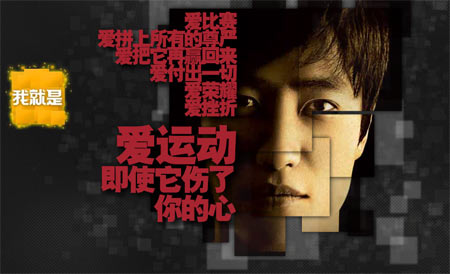
Come to think of it as the reaction to Liu Xiang's withdraw swirled, that claim captured only half the truth. There were many "Literacy Youngsters" on douban who were quick to their sensationalist style, but there were also plenty of "Angry (disgruntled)" on Tianya forum.
Disgruntled is the yin to Sensationalist's Yang; radicalism goes both ways. But the Chinese press seems to forget the ancient Chinese wisdom. And Thomas Boswell of Washington Post may never understand.
Boswell, on the basis of some disgruntled internet posts, described the Chinese as inferior cruel mobs (remember Cafferty?) who piled on their fallen hero. The sudden drama of Liu Xiong's pull-out had wide spectrum of reaction across the internet. Most voiced support; some questioned whether pulling out was a pre-determined decision; others had a hard time understanding why it had to come down to a decision on the starting block.
Let's read some Olympics press coverage, shall we? Micheal Phelps got eight gold, and New York Times had a whole column dedicated to it, discussing whether that was the greatest Olympic achievement. We were all capable of enjoying the sensation. When I turned to Sina, it had a full special page dedicated to Liu's withdraw, trumping the eight-gold-treatment. The U.S. Had also someone who didn't finish the race, although not on the starting block. Trammell pulled his hamstring in the same round and had to pull up. He got mentioned by NYT only in passing in the article covering Liu Xiang. Lolo Jones, with her unique story, was sympathized in an article.
The media non-corporation award went to Tyson Gay. NBC reporters kept giving him cue on how he was injured leading up to the event, but he insisted he was fine, just "did not get it done". Flip to sina, there were reports that Liu was running 12.96, 12.98 before the race, or more precisely, withdraw. A CCTV reporter even mention she has inside information that Liu was running close to 12.80. The numbers varied. I didn't know which one to believe exactly. But nevertheless, "Beijing Olympics should have belongs to him", as the reporter proclaimed.
There had been enough media frenzy about Liu's tragedy, most unanimously sunny, or humane as someone liked to say. (I'm quite tired of seeing the word "humanity" in Chinese press nowadays, as if the China I've lived was inhumane backward doldrums.) Liu might be fallen, but "did not “lose.” Perhaps to counter charges from the likes of Boswell, there were even reported rumors that an order was given, forbidding the country’s news media from criticizing Liu. A hero was intact.
With all this "yang" in the official media, it was not surprising to find "yin" of different voices in unofficial forums. BBS itself had been the "yin" to the official media's "yang". Together, we had "qi" of a harmonious society - joking. But whether in support of sensationalized tragic narrative or being disgustedly suspicious, it was all in accord to "one world, one dream".
I have watched Liu Xiang four years ago. He was flamboyant on camera after the surprising win, but I liked it. It was spontaneity. And I marveled.
Now four years after, I felt the sadness watching him pulling out. Liu was not on camera immediately afterward, he issued an apology - it's not like he needed to. His apology came out the same time Nike tweaked its ad campaign featuring liu. The words on the poster read:"Love competition. Love risking your pride. Love winning it back. Love giving it everything you’ve got. Love the glory. Love the pain. Love sport even when it breaks your heart." I couldn't help but thought of the word: PR.
What about the "women likes to indulge to dubious relationships" part, you may ask? Well, isn't it obvious by now? The counterpart is that men are not courageous enough.
Friday, July 25, 2008
Will capitalism save virginity?
To believers of market, market will find a solution to everything. Will it save virginity - in China?
China was traditionally a conservative country in sexuality. We've had the likes of Xi Mengqing in old novels like The Golden Lotus and anecdotal stories about gayish princes, but mostly it's hush hush. As the capitalism first arrived when China began its "open and reform" program, sex was also a vocal point of personal freedom as debated subject, so much so that also all Chinese famous novalists at the time all included sex, sometimes pervert sex as part of their depition. Mo Yan, autor of Big Breast and Wide Hips, Su Tong, Jia Ping'ao were all among them.
Then there came Shanghai Baby, a euphoria novel of sex adventures, from which the calling "beauty writer" was born. BTW, the author was relatively tame and far from "beauty" before she made a name, from what I knew of her. And there was Mu Zimei, a blogger famous for publishing details of her many sexual encounters, led the sex revolution to the pinnacle. That's why stories like disco bunny comes as no surprise to the Chinese.
Now, a new wave of chastity is quietly making waves. Surprisingly, one of the force in this new found chastity is the raw and unapologetic Chinese style capitalism. As this Danwei translation of a South China Weekend story tells, while some young women are not try about using their sexuality to their economic advantage, others now see keeping virginity before marriage as an advantage in the competitive marriage market. In economics jargon, the market has reached an equilibrium!
The question then is why virginity is cherished and being seen as an advantage. That's the question I pose to my friend, who is also a Chinese.
"That's because Chinese males are deeply insecure about their sexuality. Having a virgin without prior sexual experience as a wife helps them not being exposed sexually."
She is equally unapologetic.
Related Content of This Rocking PostThursday, June 26, 2008
Action Art
You call me crazy, I call it art.
Hollywood's KongFu Panda is sweeping through China, and a Chinese artists' boycotting of the movie quickly becomes news. Zhao Bandi, who advocates the boycott by writing public letter to the authority and using his own blog as a fighting ground, is an action artist, or performance artist.
Because of his work of goofy performance arts, some wiser bunch suspects the boycotting itself is his form of action art, perhaps referring to many boycotts of french products and others following the Olympic Torch episode. However, he emphasizes he isn't performing and really means it when being interviewed. "Hollywood movies," he says "is representative of homogeneous American culture." And he wouldn't let his beloved panda, whose image appears in almost all his action arts, be used and demeaned.
Wow, he is serious!
But hold on. Who is to say his public denial about performing an action act isn't part of the whole scheme? isn't in itself part of the art? That's the beauty of permanence art - you are never sure which part of his action is art and which is not! So the thought goes, all the way to the deepest Chinese philosophical thinking.
More over, when you join the discussion, or join to criticize, ridicule him, as many media and blogs do, you become part of the action. Brilliant.
I'm not sure Zhao himself realize that. But looking from afar from my angle, China today is a giant stage of action art.
Just recently, a young writer, Hanhan, opens his usually boasting mouth again on TV, pronouncing many prominent literary figures in history - not only those acclaimed ones in the new republic but also many classical ones in dynastic history - overrate and not good at language. Fine, he is entitled to his own opinion, although his remarks are often of bad taste. The curious thing is that his remarks stirs an echo. His fans trumpet him as a hero, others reply serious arguing in favor of those classical writers, still others denounce him. The fact that Hanhan is just a character and likes to provoke seems escape everybody. Beijing Youth Daily even organizes a multi-page discussion of the topic!
Every society has its characters and oddballs. The more open a society is, the more chance of such oddities are, and the more tolerant the public of it. The uniqueness of China seems to be high the media attention and public participation of those. Energies are spent on trivial acts, as if all member of society are part of some action art. Westerners charge Chinese being "sensitive" and "overreact", but they don't know many Chinese create the same way to the trivial issues within.
Part of the reason, I speculate, is the unprecedented freedom of speech Chinese enjoy, and the same time the boundaries of free speech. Because of free speech, everyone has an opinion and seems excited to expressed, often in an extreme way to attract attention and being unique. And because of the limit of it, more energy is paid to seemingly trivial debates.
The slow unfolding transition, the so-called reform, also has a toll on people's nerves and culture. In a way, the Chinese are putting into a slow cooking furnace where every aspects of the society has a side of new and another of old,it challenges the norm of language and behavior contently. Looking outside of it, you see a giant stage of action art. Even the language is fluid. Maybe one day, Chinese will simply use mistress for mistress, in stead of the more colorful er nai, meaning second breast literally, a term that reflect the more innocent and righteous majority's contempt.
Art is not always easy to be understood, and sometimes has a thin line from strangeness. I'm more in anticipation of Wall-E.
Wednesday, May 28, 2008
Crazy English? Or Crazy education system?
To follow up my post about Chinglish, I've notice an article about Crazy English, which is providing English training for the Olympics.
Crazy English? How come I've never heard of that? Even though I've got perfect score on TOEFL back then (that's wasn't difficult, I prepared for a week), and judging by the years of its operation I should have known of.
If we don't have patience to read through the whole article, you are not missing much. The teaching approach was mainly of motivating and making students shout out loud in English and pleasing crowd with stupid banters like “One-sixth of the world’s population speaks Chinese. Why are we studying English? Because we pity them for not being able to speak Chinese!” by its Oprah-going-crazy style leader.
I remember days when we tuned in to BBC news lying in our bed after lights-out in our college days. Back then, English films and books weren't widely available in China as today. We would jam into a hall watching a tiny overhead TV to watch God Father or a room with view. We would rely on English rare visits by visiting professors and self-formed informal groups to practice speaking. We learned English just fine.
Now, English material is as readily available as ever. Yet you see gimmickry program like Crazy English, from which I'm not even sure proper English can be learned, gets more popular. It probably just shows that education market is huge in China, you are destined to get rich even if you can only manage to get a very small slice out of the state-controlled system.
Maybe it's not Crazy English, it's China's crazy education system that has failed. As for the Olympics, doesn't it take some of the foreign mystiques away if everyone in Beijing speaks good English?
Monday, May 26, 2008
Ingenious Chinglish
just when I think China nowadays are more imitative than creative, something always comes along to prove me wrong. It turns out, the young Chinese are not only reassembling their economy and culture, they've extended their innovative ambition to the English language.
A new English word is coined by young Chinese. Drunbility, which translates into 装逼 in Chinese (dirty and offensive, be aware) urban slang, means roughly insincere, pretentious and hypocritical rolled into one. The first part of the word rhymes phonetically with the Chinese slang, and -lity is used to complete the word as a descriptive noun.
The ironically impressive part is exactly the coinage in English. Since many in China see the overdose of the use of English in everyday conversations by new elite, mixing English words in between, as one form of pretentiousness, using English to coin the word achieves to highlight just that.
Thou the divine language conqueror, I bow to thy genius-ness.
(In casual conversations, I may not be able to string together a complete sentence in Chinese without mixing some English, it's because the English words come up quicker for me, Please spare me.)
Sunday, May 25, 2008
Proof that religion can potentially leave you brain damaged
Move over Tom Cruise and your silly Scientology remarks.
In Cannes, Sharon Stone said of "karma" when asked about her thoughts of Si Chuan earthquake, in her heightened dramatic voice.
So Sharon, since your "good friend" Dalai Lama didn't teach you what exactly Karma means, let me try to get your head straight. Karma, is the consequence of actions in the interrelated world. So if you spill hate on some people and that comes back to you, that's Karma. Earthquake has nothing to do with human actions. If you really want to stretch it, 9/11, the hideous hate crime partly as a result of the U.S. foreign policy, or so they claimed, or hurricanes, many amplified by global warming caused by human society, scientists say, could be asked of "Is that karma?" But that wouldn't be right, since those who suffered had nothing to do with the causing actions. But, even Sharon Stone wouldn't be brain-damaged enough to pontificate such in public.
Now with those remarks, Chinese people would possibly detests films acted or produced by Ms Stone. That would be karma. Then again, when does Sharon Stone ever have any film worth watching?
Update: Stone apologized and Dior retracted her ads. Is that Karma? Wink, wink.
Wednesday, May 21, 2008
Hooters and the cultural deficit
A moment of silence for the perished.
Now something more light-hearted.
If you go to the Beijing Olympics this summer, you can not only taste a slice of China but also find comfort in...hooters, which opened last year. Where else can you find a lame place where waitresses dancing to 80s pop songs like YMCA? Not even in America.
The fact that Beijing has the Hooters and the Hooters hasn't met much objection is not surprising, given the extremely pro-business regulation there and not much else. To quote some Chinese hooters girl, "In China, there aren't many feminists". Besides, sexual content in restaurant and entertainment business isn't exactly new in China's homegrown industry. In fact, I recently find that China has legitimized soft-porn industry too, only under the disguise of fine art nude photography.
I'm a bit surprised that Hooters is able to marketing itself as "American Spirit". But maybe not. The so called cultural deficit has been huge for China. To get a grip on this, you only needs to walk into a Chinese book store and an American Barns&Nobles. The amount of translated American publications along with its original version is huge. The same can't be said about Chinese books. (Hong Huang mentioned about this also in her recent msnbc interview.)
So the real interesting question is: Are they really able to understand the U.S. through watching American TV soaps and going to Hooters? On the second thought, maybe not, seeing how many people think Sex and City represents typical America. Shanghaiist has a very interesting, though a bit old, interview of a Chinese college hooters girl who was encouraged to worked there by her parents, who though hooters represent American value of "passionate and friendly", like..."mayflowers". It confirms also the genius-ness of South Park. Just like in Raisin, customers who want to flirt are encouraged to "come back".
At least, unlike Hooters in America, Hooters Beijing doesn't have DVDs of hooter girls for sale. Then again, they are unlikely to find so many double-Ds in China too. In other words, not much "hooters"*.
*hooters is American slang for breasts.
Thursday, May 8, 2008
How beauty is born and man deals with it
This shouldn't sit well with the cosmetic industry. The real question is, what look does the woman in the video really prefer in her life? Is the human natural perception worth the fight? Related Content of This Rocking Post
Wednesday, May 7, 2008
We Are Peasants
This post means not to be taken too seriously. Seeing how late Bo Yang's Ugly Chinese can be taken a run with, I have to caution. But the infinite wisdom remains.
Ever heard of Chinese teenagers quarrel? "You are such a peasant" one would say, sometimes in a half joking way. The other would be taken aback, "No, you are." Don't tell people in Wisconsin or Provence France, but Chinese are not proud of being called peasants.
Calling someone peasant is one of those preciously few things that has the magical power of stroking ones ego. A while ago, I was out drinking with some of my male friends, upon whence someone brought up the topic that Ning Jing, a Chinese actress known for her role in The Red Valley, married to an American actor named Paul Kersey from Minnesota. That made them sad, since many of them fancied her. Until, someone burst it out, "peasant", referring to the fact that Paul Kersey was a farm owner. The laughters followed, beer tasted a lot better. All was forgiven.
However, not to be mistaken, we Chinese, as a people, were peasants. And to a degree, we still are.
Image from Shanghai Planet
Chinese being peasants or China being agriculture state means Chinese are historically quite peaceful. Over the years, we grew quite good at being peasants. So while Western ancient empires such as Rome built on subjugation and facilitation of commerce, the highest objective of each Chinese dynasty, except maybe the Mongols, was to protect itself from outside forces, so the people could live their agrarian Xanadu. Yes Chinese warred to ensure silk trade route too, but that always came as second order. That Confucius guy codified the ethnics of a peasant society - to better yourself and then the family and then the nation. Therefore, the dream of a retired Chinese intellectual was to "pick asters beneath the Eastern fence,my gaze upon the Southern mountain rests".
Today a dominant proportion of population are still farmers despite all the fanfare about migrant workers. What about the urbanites, you ask. They are no less peasant. They may have some money, but peasantry is deeply rooted. Why else bourgeois is still a fashionable urban daily vocabulary?
Sometimes I feel I can understand why places like Paris don't like Chinese. Let's call it peasant-phobia for the time being. If you have traveled to the Europe recently you'd know what I meant. Scores of Chinese tourists -peasants I may remind you -with cash strapped on their waists can be seen at almost every attraction. If their picture snapping go-merry doesn't give their peasantry away, their distinct fashion does. You see that black sports blazer paired with athletic shoes? He would be a rural entrepreneur. A better tailored suit with white shirt underneath even under the summer heat? That's a give away, he is most certainly a local government official on organized tour.
In Paris, I was approached by a lady who gave me 600 euro on the street and asked me to help her buy a Louis Vuitton handbag. Apparently she had enough shopping trips to the store that LV securities could recognize her; and apparently a bag straight from Champs-Elysees somehow meant more to her than those available in most big Chinese cities. (Most LVs are made in China also. EU's product origin rule allows it not to label them "made in China", although I don't think she cared to know.) Maybe they mistook her as bag scalper (I don't know that's possible), maybe she couldn't bring herself to be understood, maybe LV was disgusted with the peasantry they decided not to let the poor lady have her bag, as gift she said. I wouldn't know. What I did know was she trusted some total stranger who looked like her patriot with cash in order to buy some luxury bag. Frankly, I couldn't think of any other people who could pull that kind of peasantry off.
Enough with the anecdotes, what about the big picture? China is now the factory of the world, but we are still peasants? Does that make sense?
No one likes to admit it, but we are peasants. Chinese spend like peasants; saving is always a virtue since forever. How else do you explain accumulating billions of trade surplus, fully knowing the excessive buildup itself is going to hurt the value? (learned anything from Japan?)The leading artists are peasants; Zhang Yimou, Mo Yan certainly are, favorite skits performers on New Years Gala are peasants too without exception. The CCP is Peasant. This used to be by its own admission. Judging by its often utter clumsiness, we see nothing changed much. To take it too far like some columnist in Washington does, is giving the CCP too much credit. when you have to find grain self-sufficiency policy to criticize for, you are trying too hard. Worse, you are committing the sin of not utilizing the wisdom of this blog post. Even when the Chinese saves up enough and tries to buy some asset, we don't escape being peasant. Wall Steer gladly takes the money for some non controlling shares, and then leave the bashing job to the main street. The only sure thing Chinese can buy, is the large sum of commission paid to American and European consultancies like Goldman Sachs.
All this brings us back to the topic of Olympics. Why do Chinese care so much of Olympics? Not only the government, but the ordinary people. By now you should have guessed right, because we are peasants trying to join the industrial party decades too late. We'd be better off if we acknowledge and embrace that fact.
*The challenge to you: List your peasants and the thing you find peasant.
我们都是农民
鉴于柏杨的丑陋的中国人能被用来借题发挥,我必须先说明,别对这帖子太当真。
有没有听过中国小孩子吵架?你真是个农民,一个会说。不,你才是,另一个不爽地反击。不像威斯康星人或法国南部的人,中国人不喜欢被人叫农民。
称呼别人农民有奇妙的治疗心灵的特效。现在这种灵丹妙药已经不多见了。有次和一些朋友们喝酒聊天,有人不经意提起宁静嫁了美国来自米尼苏达的演员。几个爷们有点愤愤,要知道宁静曾是他们暗恋的对象。突然不知是谁崩出一句,农民。确实,宁静老公算是个农场主。于是大家哈哈大笑,宁静的“大错”一笔勾销,酒也变得好喝起来。
但是不可否认中国人作为一个民族一直是农民。就算现在我们也基本是。
历史上的农业中国小日子混得不错,这也让中国能保持一个相对和平的帝国。不同于古罗马等西方文明帝国以征服和维商的风格,中国历朝除了元朝军事上最高要务是保持边界的和平,让内地的农业社会能不受扰得发展自己的桃花源。当然中国也为保证丝绸之路的通畅发动过一些征战,但那些相对处于次要的地位。 孔夫子的修身齐家治国成了农业中国的道德要范,退休的知识分子更是以“采菊东篱下,悠然见南山”为理想。
今日中国农民仍占人口的大多数。那么城市里的人呢,他们也不见得不农民到哪里去。钱也许有一点,但农民是扎根的事情,要不然怎么小资这个词还能在城市里这么流行?
有时候我能够理解为什么巴黎这样的城市不喜欢中国人。让我们暂且称之为农民恐惧症。如果你近期去过欧洲你知道我的意思。几乎每一个景点都能看到一批批腰间塞着现金的中国人,农民,让我提醒你。如果他们一气猛拍照片还让人看不出来的话,穿着就把他们出卖了。穿着貌似休闲的西服脚上配着运动鞋的,十有八九是乡镇企业家;那穿着稍好的黑西服里面一定配着白衬衫即使炎夏也如是的则一定是地方政府的考察团官员。
在巴黎我碰到过一位中国大姐。这位大姐当街给我600欧元要我帮她去LV店买手袋。显然她去多了店里连保安都能认出她来了。显然她觉得直接从香榭丽舍出来的LV要比中国满大街都是的要有意义的多。这个是给我侄女的,她说。(别告诉她大多数lv产品一样是中国制造,只是欧洲的出产地要求不需要它打上这个标记。)我不知道是lv店怕她是贩卖包的,是没法听懂她说什么,还是被农民性恶心着了故意不卖给这位可怜的大姐。我只知道她能信任一个看似中国同胞的陌生人现金,就为了多买一个如假包换的奢侈品。说实话我想不出这世界上还有哪国人这么纯朴这么可爱这么可笑这么农民。
也许秩事不够说明问题,那么让我们把视点放大点。中国已经成为世界的制造业中心,我们还是农民?可能么?
也许我们不想承认,但答案是肯定的。中国人消费像农民。勤俭节约是自古以来的美德。不然怎么解释明明知道这美元积累的越多越可能不值钱还累积起一天十个亿的贸易顺差?艺术上,一线的也是农民当家。张艺谋莫言,农民。春晚最受欢迎的小品还是农民。CCP首先也是农民,虽然西方的评论家喜欢用一些不着边际的形而上的词。如果一个评论家需要批评中国的粮食自给政策的话,显然是太过努力用力过猛了;更糟的是,显然没有吸取这贴子里的智慧。;) 就算中国积累了点钱伤脑筋想要买点资产,我们看起来还是农民。华尔街左边高兴的接过不构成控股资产的钱右边媒体政客就开始抨击。中国唯一能确认买到的是众咨询公司的巨额咨询费。
说多了,让我们回到最近热门的奥运话题上来。中国人不管是政府还是民众为什么这么在乎奥运会?恭喜你答对了,因为我们是农民,是想要加入工业社会的派对但几十年太迟的农民。也许我们需要承认需要拥抱我们是农民这一事实。 Related Content of This Rocking Post
Sunday, May 4, 2008
The Peril in the Name of Culture
 Against the risk of being ridiculed, I'd say I learned something from, a las, Marie Clair.
A story in the magazine details how Thailand government prevents the Karen - the long necked people - from leaving the country, in the name of preserving the culture. Karen girls are left no option but to put on their traditional metal neck toils and pose for tourists in exchange for paltry salary. In effect, human zoo.
This reminds me a lot of the "cultural genocide" talk of the Tibetan situation. Aside from the fact much of the accusation is categorical -I've never seen any present day detailed evidence of cultural sabotage other than what happened in cultural revolution some 40 years ago or the influx of other ethnicities into Tibet, we should be very careful in defining cultural preservation before politicizing it.
Culture is dynamic. It changes and shapes itself through out history and interactions of people. What do we have left if we cleanse Korean or Japanese culture of Chinese elements? Do we have to agree with the laments of a Chinese chauvinist that present day Chinese culture has many elements of Manchuria culture and even increasingly western culture? Trying to preserve the Tibetan culture integrity certainly has romantic idealism and to some extent is laudable. However, going at it by isolating Tibet and labeling every change as 'culture genocide' is hypocritical and pure idiocy. Even if Tibet were to escape China, it wouldn't escape modernism.
As Karen people can attest to, it is people that create the culture. Culture should not be the shackle on the people.
 del.icio.us me


 Posts
Posts

